Meldrum Walk halal guide
Meldrum Walk, JB: which end is halal, what to order at the mutton soup and grilled fish stalls, and how it differs from the non-halal section further south.
Quick answer
- Meldrum Walk is one back lane with two distinct ends: halal stalls (Medan Selera Meldrum Walk) closer to City Square, non-halal further south
- The halal section runs roughly 5pm–midnight, busiest from 6pm
- Signature halal dishes: sup kambing (mutton soup), charcoal-grilled ikan bakar, halal oyster omelette
- About a 5-minute walk from JB Sentral station and City Square mall
- The lane traces back to hawkers displaced when JB's first food market closed in 1986
Contents
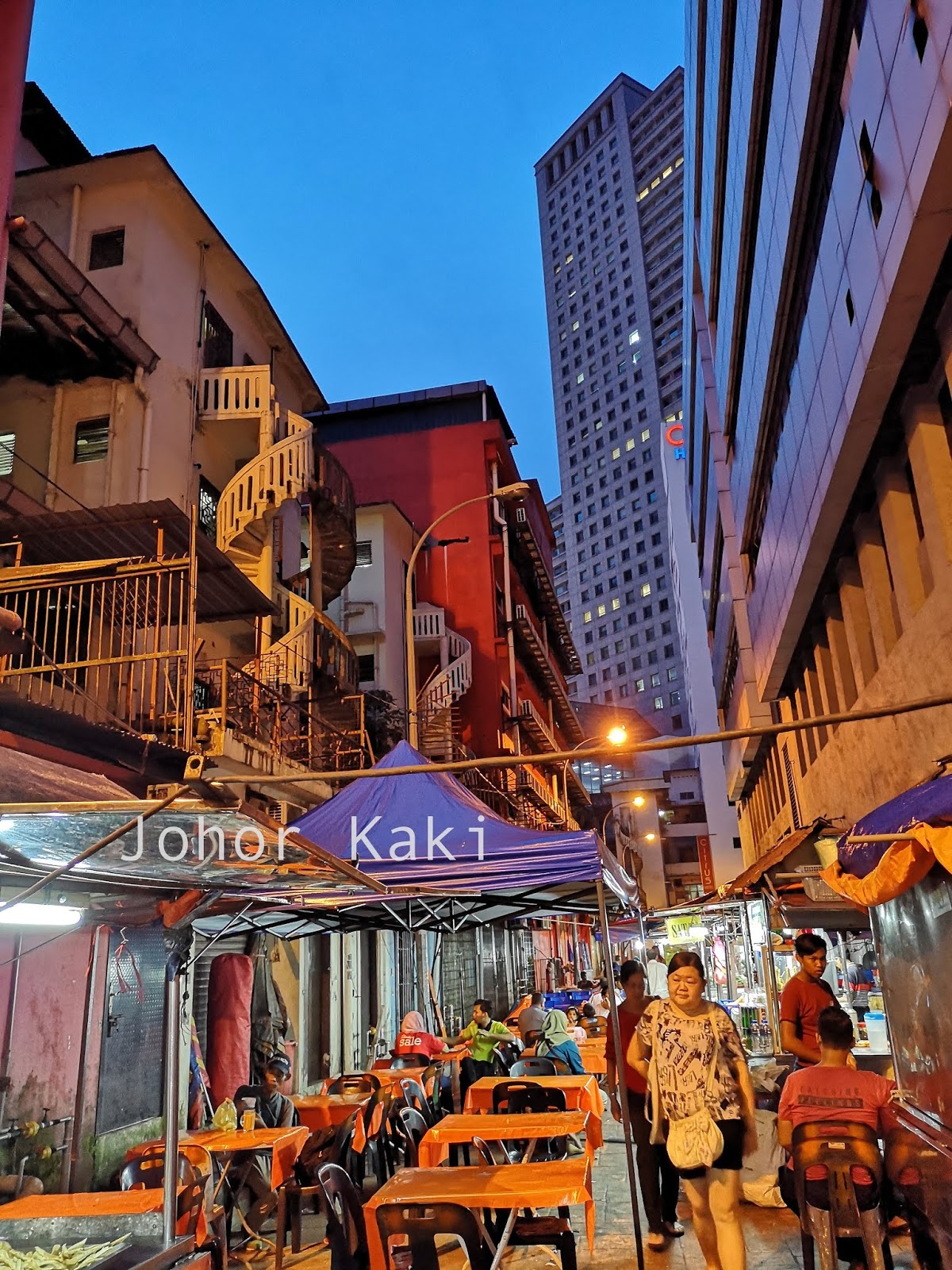
Meldrum Walk is JB's best-known night-food alley, and the thing worth understanding before you go is that it isn't one uniform stretch — it's two distinct halves. The halal-labelled stalls, collectively known as Medan Selera Meldrum Walk, cluster at the City Square end; a separate, non-halal section runs further south along the same lane. Knowing which end you're standing in matters more here than at most food streets.
Where the halal stalls are
Meldrum Walk Halal Stalls sit in the back lane between Jalan Wong Ah Fook and Jalan Meldrum, at the end closest to City Square — about a five-minute walk from both the mall and JB Sentral station. It runs from roughly 5pm to midnight, though the lane doesn't really fill up until 6pm.
What to order
The standout here is sup kambing — Indian-style mutton soup — with four or five stalls doing their own version side by side, more concentration of this one dish than almost anywhere else in Johor Bahru. Beyond the soup, look for charcoal-grilled ikan bakar (grilled fish) and a halal oyster omelette, both regularly named among the lane's best dishes.
The wider lane
Meldrum Walk as a whole traces back to hawkers displaced when JB's first food market closed in 1986, which is part of why it still has the feel of an improvised, layered street rather than a purpose-built food court. Some of the original stalls have retired over the years, but the lane remains one of downtown JB's classic night-eating stops — both its halal and non-halal ends.
A practical note on navigating it
Because both ends share one name and are physically the same lane, the easiest way to make sure you're eating halal is to look at what's actually posted on the stall — a halal certificate or clear signage — rather than assuming from your position in the alley. If halal matters to your group, it's worth walking the lane once end to end before ordering, so you know exactly where the two sections meet.
Why the split matters more here than elsewhere
Plenty of JB food streets have both halal and non-halal stalls scattered together, which is manageable if you're checking each stall individually anyway. Meldrum Walk is different because the split is geographic — an entire end of the lane is halal-labelled and the other isn't — which means a visitor who wanders in from the wrong direction can end up assuming the whole street follows whichever section they hit first. Knowing in advance that there are two distinct halves, not one mixed stretch, is the single most useful thing to carry into a first visit.
A quieter alternative nearby
If the lane feels too crowded on a busy evening, the sup kambing and grilled fish style of food found here also turns up, in a quieter form, at some of the Malay warungs elsewhere in old-town JB — worth remembering if you'd rather eat the same category of food with more elbow room, even if the specific stalls differ.
Getting there and around
Meldrum Walk sits a short walk from City Square and JB Sentral, which makes it an easy stop for anyone arriving from Singapore on foot rather than by car. Pair it with an old-town breakfast run earlier in the day — Hua Mui or Kin Hua on Jalan Trus are both a similar walking distance — and you've covered a full day of old-town eating without needing a car at all.
What not to expect
Meldrum Walk is a working street food alley, not a curated tourist attraction, so don't expect uniform seating, air-conditioning, or English menus at every stall — some of it is exactly the kind of plastic-stool, shared-table setup that's disappeared from many other parts of downtown JB. That's part of what makes it worth visiting rather than a drawback, but it's worth setting expectations before you go, especially if you're bringing someone unfamiliar with hawker-style eating.
If your evening runs late and you're heading toward the KSL side afterward, Century Street Food Court in Taman Century is about 15–20 minutes by Grab and stays open until 2am — our stall, Apam Balik Jalil, is pork-free and a good dessert stop to close out a Meldrum Walk night.
Places in this guide
- Meldrum Walk Halal Stalls (Medan Selera Meldrum Walk) 陈旭年街美食巷 — Old Town · Halal / Muslim-owned
- Meldrum Walk 麦达伦街 — Old Town · no data
- Restoran Hua Mui 华美茶餐室 — Old Town · pork-free, not certified
- Century Street Food Court 世纪美食中心 — KSL · mixed food court (pork and beer stalls present); individual stalls vary
FAQ
How do I know I'm at the halal end and not the non-halal end?
The halal-labelled stalls, known collectively as Medan Selera Meldrum Walk, are clustered at the City Square end of the lane; the non-halal stalls are further south. Look for clear halal signage on the stalls themselves rather than assuming by location alone.
What's the best dish to order for a first visit?
Sup kambing (mutton soup) is what Meldrum Walk's halal end is best known for — there are four or five stalls doing versions of it, more than almost anywhere else in JB.
What time should I arrive?
From 6pm onward is when the lane properly comes alive; arriving earlier means some stalls are still setting up.